
Brains Helping Brains
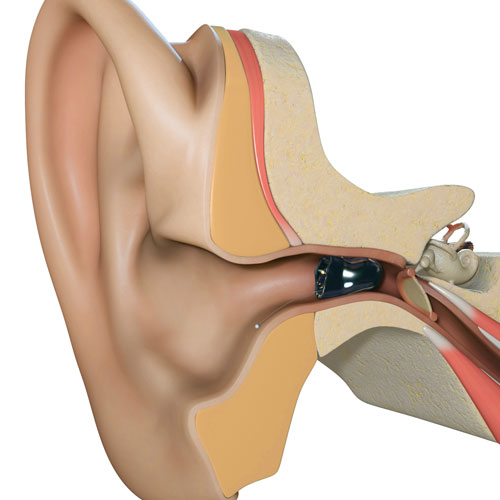
The global hearing aid market is large, and will only grow as the population continues to age. With hearing aids becoming smaller and more inconspicuous, it should come as no surprise that the processing is getting as smart as the electronics. It is becoming increasingly common for hearing aids to be connected to smart phones and other devices, but what is the next step? That’s where Starkey Laboratories comes in.
Minnesota-based Starkey Laboratories has been innovating hearing aids for years, producing connected and nearly invisible-in-use hearing aids. The company even has patent applications directed to means of fall detection incorporated into hearing aids. Now, Starkey recently filed a second application for a hearing aid that utilizes machine learning to enhance a target signal in a noisy environment and improve speech intelligibility.
What is the next step? How may hearing aids one day interact with other “smart” devices or implants, such as Elon Musk’s Neuralink?
Related Posts

Cala Health Claims to Have the only Patented Neurostimulation for Essential Tremor Treatment. The Patent Data Disagrees
Cala Health has figured out that innovations backed by patents make them exponentially more valuable in the marketplace. However, in a zest…

Capital One is Investing in AI Biotech? What’s in their wallet?
In the past 18 months, Capital One has expanded past its usual banking activities, and begun exploring the AI Biotech Sector. But do they…


Google AI Reinvents Speech Recognition. Who will follow?
There is no doubt that the big 5 tech companies (Apple, Amazon, Google, Facebook, and Microsoft) have developed massive IP portfolios in…